Meta description: Build a cycling brand that stands out with clear positioning, a strong brand story, and differentiation tactics you can measure and scale.
SEO description: Learn how cycling brands can win in a crowded market using positioning, brand storytelling, and measurable differentiation strategies.
Why cycling brands struggle to stand out right now
Cycling is booming in product choice and shrinking in attention. Riders can compare frames, components, apparel, and accessories in minutes, often side by side with dozens of credible alternatives.
That means your brand is rarely judged on product alone. It is judged on clarity, trust, identity, and community. The brands that win are the ones that are easy to understand, easy to remember, and easy to recommend.
The goal is not to be everything to everyone. The goal is to own a specific place in the rider’s mind, then prove it repeatedly.
Positioning starts with focus, not slogans
Positioning is the decision you make about who you serve, what you are known for, and why you are the best choice for that specific person and job.
If you try to position your brand around generic promises like performance, quality, and comfort, you will blend in. Most credible cycling brands can claim those.
Instead, build positioning around a sharper edge:
A practical positioning statement you can actually use
Use this simple format:
For target rider, who wants job to be done, our brand is the category, that delivers unique outcome, because proof.
Example (template only, adapt to your brand):
For time-poor gravel riders who want reliable performance in unpredictable conditions, our brand is the adventure-ready kit system that reduces pre-ride decision stress, because every piece is tested as a matched set across weather ranges.
Keep it short enough that your sales team, customer support, and retail partners can repeat it without rewriting it.

Find a differentiation wedge in a crowded market
Differentiation is not a feature list. It is the reason a rider chooses you when alternatives are close in quality and price.
A useful way to uncover differentiation is to audit the market and look for “claimed sameness.” If every competitor says “race-proven,” you can not win by repeating it louder. You win by changing the basis of choice.
Differentiation levers that work well in cycling
Pick one primary lever and one supporting lever, then commit.
Build a brand story that is more than an origin story
Cycling brand stories often lean on founder passion, garage beginnings, or epic rides. That is fine, but it is rarely enough.
A high-performing brand story connects three things:
Use the “tension to transformation” story arc
Keep your narrative simple:
This story arc works across your homepage, packaging, social content, retail training, and athlete partnerships. Consistency is what builds trust.
Make brand building measurable with a simple scorecard
If brand is a growth lever, you need leading indicators, not only revenue. Otherwise, you will invest too late and cut too early.
Start with a monthly scorecard that combines attention, trust, and demand.
Positioning your product portfolio so it reinforces the brand
A common issue in cycling is product sprawl. Brands add categories to chase revenue, then dilute identity.
Use portfolio rules that protect your positioning:
If a product does not make your positioning clearer, it probably makes it weaker.
Content that builds the brand and drives demand
Your content should do two jobs at the same time:
A practical content mix for cycling brands:
Keep the content tied to your differentiation. Content that chases every trend will grow impressions, but not preference.
The fastest way to weaken a cycling brand is to publish content that sounds like everyone else. Your tone, tests, and proof need to match your positioning.
Turn brand building into an operational workflow
Brand strategy fails when it stays in a slide deck. You need a system that helps your team plan, create, review, and distribute consistently.
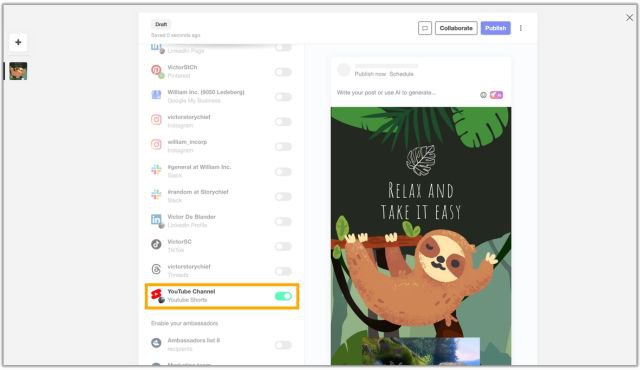
This is where an all-in-one content platform helps. With StoryChief, teams can centralize planning, collaborate in real time, keep a consistent brand voice, optimize for search engines, and publish across many channels from one workflow. You can learn more at StoryChief.
A simple workflow you can implement this quarter:
Common pitfalls to avoid
Ending
Brand building for cycling brands is a focus game. Choose a clear rider, a clear use-case, and a clear belief about how things should work. Then tell that story with proof, not hype, and measure it with a simple scorecard.
If you want, share your brand category, price point, and primary sales channel, and I will draft a one-page positioning statement plus three differentiation angles you can test in content and campaigns.